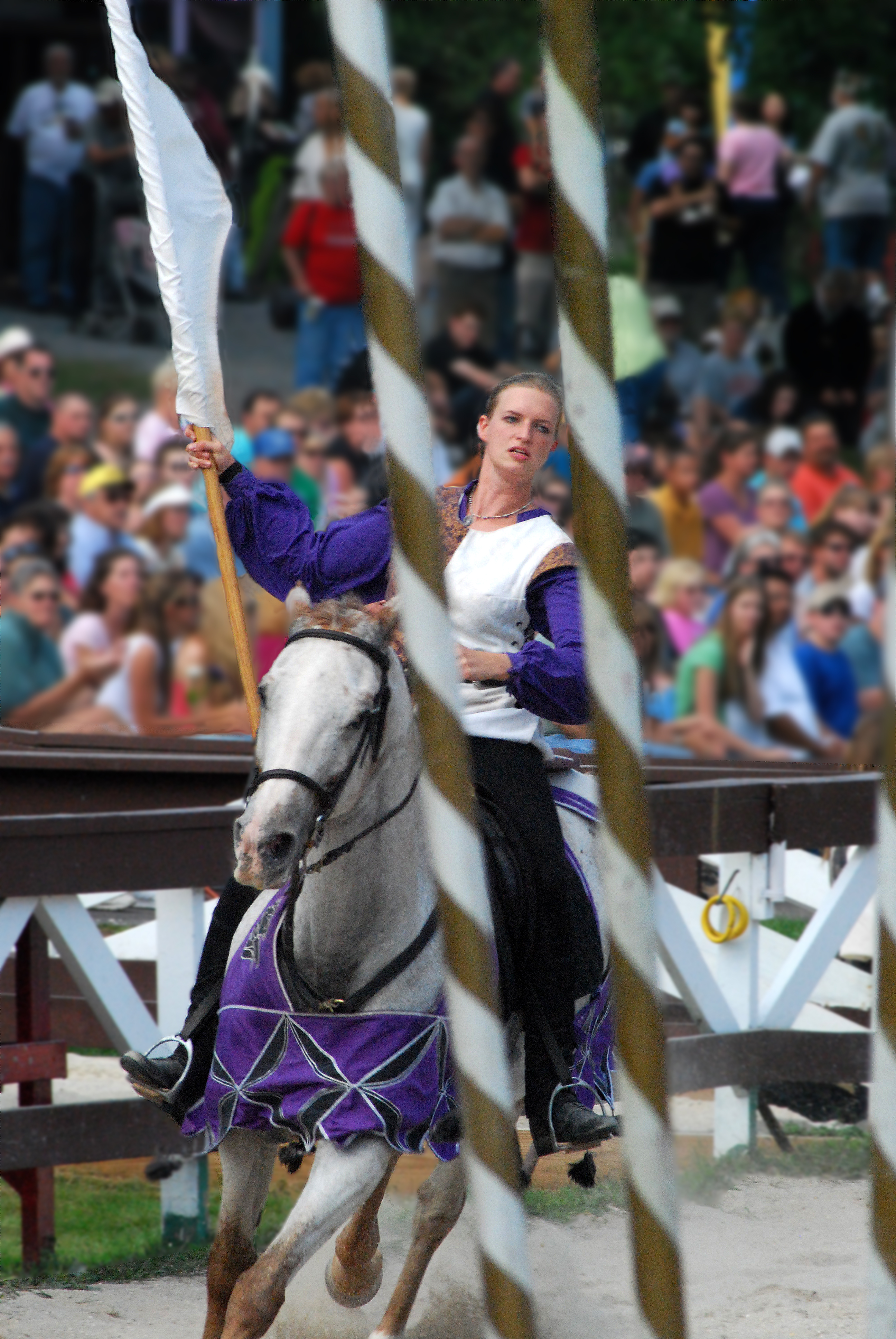
Saint Joan of Arc
by Mark Twain

The Maid of France melts the
cynical heart of the old man, Mark
Twain.  

What did he see in her?

Joan, the most remarkable human in
modern times. She is still neither
understood by history nor accepted
by the Christian world. The secular
French reject her as a fairy tale and
off-scouring. But the legal records
of her trial and rehabilitation testify
to her genuineness and glory.


The evidence furnished at the Trials and Rehabilitation sets forth Joan of Arc's
strange and beautiful history in clear and minute detail. Among all the multitude
of biographies that freight the shelves of the world's libraries, this is the only
one whose validity is confirmed to us by oath. It gives us a vivid picture of a
career and a personality of so extraordinary a character that we are helped to
accept them as actualities by the very fact that both are beyond the inventive
reach of fiction. The public part of the career occupied only a mere breath of
time -- it covered but two years; but what a career it was! The personality which
made it possible is one to be reverently studied, loved, and marvelled at, but
not to be wholly understood and accounted for by even the most searching
analysis.

In Joan of Arc at the age of sixteen there was no promise of a romance. She
lived in a dull little village on the frontiers of civilization; she had been nowhere
and had seen nothing; she knew none but simple shepherd folk; she had never
seen a person of note; she hardly knew what a soldier looked like; she had
never ridden a horse, nor had a warlike weapon in her hand; she could neither
read nor write: she could spin and sew; she knew her catechism and her
prayers and the fabulous histories of the saints, and this was all her learning.
That was Joan at sixteen. What did she know of law? of evidence? of courts?
of the attorney's trade? of legal procedure? Nothing. Less than nothing. Thus
exhaustively equipped with ignorance, she went before the court at Toul to
contest a false charge of breach of promise of marriage; she conducted her
cause herself, without any one's help or advice or any one's friendly sympathy,
and won it. She called no witnesses of her own, but vanquished the
prosecution by using with deadly effectiveness its own testimony. The
astonished judge threw the case out of court, and spoke of her as "this
marvellous child."

She went to the veteran Commandant of Vaucouleurs and demanded an escort
of soldiers, saying she must march to the help of the King of France, since she
was commissioned of God to win back his lost kingdom for him and set the
crown upon his head. The Commandant said, "What, you? you are only a
child." And he advised that she be taken back to her village and have her ears
boxed. But she said she must obey God, and would come again, and again,
and yet again, and finally she would get the soldiers. She said truly. In time he
yielded, after months of delay and refusal, and gave her the soldiers; and took
off his sword and gave her that, and said, "Go -- and let come what may." She
made her long and perilous journey through the enemy's country, and spoke
with the King, and convinced him. Then she was summoned before the
University of Poitiers to prove that she was commissioned of God and not of
Satan, and daily during three weeks she sat before that learned congress
unafraid, and capably answered their deep questions out of her ignorant but
able head and her simple and honest heart; and again she won her case, and
with it the wondering admiration of all that august company.

And now, aged seventeen, she was made Commander-in-Chief, with a prince
of the royal house and the veteran generals of France for subordinates; and at
the head of the first army she had ever seen, she marched to Orleans, carried
the commanding fortresses of the enemy by storm in three desperate assaults,
and in ten days raised a siege which had defied the might of France for seven
months.

After a tedious and insane delay caused by the King's instability of character
and the treacherous counsels of his ministers, she got permission to take the
field again. She took Jargeau by storm; then Meung; she forced Beaugency to
surrender; then -- in the open fie]d -- she won the memorable victory of Patay
against Talbot, "the English lion," and broke the back of the Hundred Years'
War. It was a campaign which cost but seven weeks of time; yet the political
results would have been cheap if the time expended had been fifty years.
Patay, that unsung and now long-forgotten battle, was the Moscow of the
English power in France; from the blow struck that day it was destined never to
recover. It was the beginning of the end of an alien dominion which had ridden
France intermittently for three hundred years.

Then followed the great campaign of the Loire, the capture of Troyes by
assault, and the triumphal march past surrendering towns and fortresses to
Rheims, where Joan put the crown upon her King's head in the Cathedral, amid
wild public rejoicings, and with her old peasant father there to see these things
and believe his eyes if he could. She had restored the crown and the lost
sovereignty; the King was grateful for once in his shabby poor life, and asked
her to name her reward and have it. She asked for nothing for herself, but
begged that the taxes of her native village might be remitted forever. The
prayer was granted, and the promise kept for three hundred and sixty years.
Then it was broken, and remains broken to-day. France was very poor then,
she is very rich now; but she has been collecting those taxes for more than a
hundred years.

Joan asked one other favor: that now that her mission was fulfilled she might
be allowed to go back to her village and take up her humble life again with her
mother and the friends of her childhood; for she had no pleasure in the
cruelties of war, and the sight of blood and suffering wrung her heart.
Sometimes in battle she did not draw her sword, lest in the splendid madness
of the onset she might forget herself and take an enemy's life with it. In the
Rouen Trials, one of her quaintest speeches -- coming from the gentle and
girlish source it did -- was her naive remark that she had "never killed any one."
Her prayer for leave to go back to the rest and peace of her village home was
not granted.

Then she wanted to march at once upon Paris, take it, and drive the English
out of France. She was hampered in all the ways that treachery and the King's
vacillation could devise, but she forced her way to Paris at last, and fell badly
wounded in a successful assault upon one of the gates. Of course her men lost
heart at once -- she was the only heart they had. They fell back. She begged to
be allowed to remain at the front, saying victory was sure. "I will take Paris now
or die!" she said. But she was removed from the field by force; the King ordered
a retreat, and actually disbanded his army. In accordance with a beautiful old
military custom Joan devoted her silver armor and hung it up in the Cathedral of
Saint Denis. Its great days were over.

Then, by command, she followed the King and his frivolous court and endured
a gilded captivity for a time, as well as her free spirit could; and whenever
inaction became unbearable she gathered some men together and rode away
and assaulted a stronghold and captured it.

At last in a sortie against the enemy, from Compiègne, on the 24th of May
(when she was turned eighteen), she was herself captured, after a gallant fight.
It was her last battle. She was to follow the drums no more.

Thus ended the briefest epoch-making military career known to history. It lasted
only a year and a month, but it found France an English province, and
furnishes the reason that France is France today and not an English province
still. Thirteen months! It was, indeed, a short career; but in the centuries that
have since elapsed five hundred millions of Frenchmen have lived and died
blest by the benefactions it conferred; and so long as France shall endure, the
mighty debt must grow. And France is grateful; we often hear her say it. Also
thrifty: she collects the Domrémy taxes.

Joan was fated to spend the rest of her life behind bolts and bars. She was a
prisoner of war, not a criminal, therefore hers was recognized as an honorable
captivity. By the rules of war she must be held to ransom, and a fair price could
not be refused if offered. John of Luxembourg paid her the just compliment of
requiring a prince's ransom for her. In that day that phrase represented a
definite sum -- 61,125 francs. It was, of course, supposable that either the King
or grateful France, or both, would fly with the money and set their fair young
benefactor free. But this did not happen. In five and a half months neither King
nor country stirred a hand nor offered a penny. Twice Joan tried to escape.
Once by a trick she succeeded for a moment, and locked her jailer in behind
her, but she was discovered and caught; in the other case she let herself down
from a tower sixty feet high, but her rope was too short, and she got a fall that
disabled her and she could not get away.

Finally, Cauchon, Bishop of Beauvais, paid the money and bought Joan --
ostensibly for the Church, to be tried for wearing male attire and for other
impieties, but really for the English, the enemy into whose hands the poor girl
was so piteously anxious not to fall. She was now shut up in the dungeons of
the Castle of Rouen and kept in an iron cage, with her hands and feet and neck
chained to a pillar; and from that time forth during all the months of her
imprisonment, till the end, several rough English soldiers stood guard over her
night and day -- and not outside her room, but in it. It was a dreary and hideous
captivity, but it did not conquer her: nothing could break that invincible spirit.
From first to last she was a prisoner a year; and she spent the last three
months of it on trial for her life before a formidable array of ecclesiastical
judges, and disputing the ground with them foot by foot and inch by inch with
brilliant generalship and dauntless pluck. The spectacle of that solitary girl,
forlorn and friendless, without advocate or adviser, and without the help and
guidance of any copy of the charges brought against her or rescript of the
complex and voluminous daily proceedings of the court to modify the crushing
strain upon her astonishing memory, fighting that long battle serene and
undismayed against these colossal odds, stands alone in its pathos and its
sublimity; it has nowhere its mate, either in the annals of fact or in the
inventions of fiction.

And how fine and great were the things she daily said, how fresh and crisp --
and she so worn in body, so starved, and tired, and harried! They run through
the whole gamut of feeling and expression -- from scorn and defiance, uttered
with soldierly fire and frankness, all down the scale to wounded dignity clothed
in words of noble pathos; as, when her patience was exhausted by the
pestering delvings and gropings and searchings of her persecutors to find out
what kind of devil's witchcraft she had employed to rouse the war spirit in her
timid soldiers, she burst out with, "What I said was, 'Ride these English down' --
and I did it myself!" and as, when insultingly asked why it was that her standard
had place at the crowning of the King in the Cathedral of Rheims rather than
the standards of the other captains, she uttered that touching speech, "It had
borne the burden, it had earned the honor" -- a phrase which fell from her lips
without premeditation, yet whose moving beauty and simple grace it would
bankrupt the arts of language to surpass.

Although she was on trial for her life, she was the only witness called on either
side; the only witness summoned to testify before a packed jury commissioned
with a definite task: to find her guilty, whether she was guilty or not. She must
be convicted out of her own mouth, there being no other way to accomplish it.
Every advantage that learning has over ignorance, age over youth, experience
over inexperience, chicane over artlessness, every trick and trap and gin
devisable by malice and the cunning of sharp intellects practiced in setting
snares for the unwary -- all these were employed against her without shame;
and when these arts were one by one defeated by the marvellous intuitions of
her alert and penetrating mind, Bishop Cauchon stooped to a final baseness
which it degrades human speech to describe: a priest who pretended to come
from the region of her own home and to be a pitying friend and anxious to help
her in her sore need was smuggled into her cell, and he misused his sacred
office to steal her confidence; she confided to him the things sealed from
revealment by her Voices, and which her prosecutors had tried so long in vain
to trick her into betraying. A concealed confederate set it all down and
delivered it to Cauchon, who used Joan's secrets, thus obtained, for her ruin.

Throughout the Trials, whatever the foredoomed witness said was twisted from
its true meaning when possible, and made to tell against her; and whenever an
answer of hers was beyond the reach of twisting it was not allowed to go upon
the record. It was upon one of these latter occasions that she uttered that
pathetic reproach -- to Cauchon: "Ah, you set down everything that is against
me, but you will not set down what is for me."

That this untrained young creature's genius for war was wonderful, and her
generalship worthy to rank with the ripe products of a tried and trained military
experience, we have the sworn testimony of two of her veteran subordinates --
one, the Duc d'Alençon, the other the greatest of the French generals of the
time, Dunois, Bastard of Orleans; that her genius was as great -- possibly even
greater -- in the subtle warfare of the forum we have for witness the records of
the Rouen Trials, that protracted exhibition of intellectual fence maintained with
credit against the master-minds of France; that her moral greatness was peer
to her intellect we call the Rouen Trials again to witness, with their testimony to
a fortitude which patiently and steadfastly endured during twelve weeks the
wasting forces of captivity, chains, loneliness, sickness, darkness, hunger,
thirst, cold, shame, insult, abuse, broken sleep, treachery, ingratitude,
exhausting sieges of cross-examination, the threat of torture, with the rack
before her and the executioner standing ready: yet never surrendering, never
asking quarter, the frail wreck of her as unconquerable the last day as was her
invincible spirit the first.

Great as she was in so many ways, she was perhaps even greatest of all in the
lofty things just named -- her patient endurance, her steadfastness, her granite
fortitude. We may not hope to easily find her mate and twin in these majestic
qualities; where we lift our eyes highest we find only a strange and curious
contrast -- there in the captive eagle beating his broken wings on the Rock of
Saint Helena.

The Trials ended with her condemnation. But as she had conceded nothing,
confessed nothing, this was victory for her, defeat for Cauchon. But his evil
resources were not yet exhausted. She was persuaded to agree to sign a
paper of slight import, then by treachery a paper was substituted which
contained a recantation and a detailed confession of everything which had
been charged against her during the Trials and denied and repudiated by her
persistently during the three months; and this false paper she ignorantly
signed. This was a victory for Cauchon. He followed it eagerly and pitilessly up
by at once setting a trap for her which she could not escape. When she
realized this she gave up the long struggle, denounced the treason which had
been practiced against her, repudiated the false confession, reasserted the
truth of the testimony which she had given in the Trials, and went to her
martyrdom with the peace of God in her tired heart, and on her lips endearing
words and loving prayers for the cur she had crowned and the nation of
ingrates she had saved.

When the fires rose about her and she begged for a cross for her dying lips to
kiss, it was not a friend but an enemy, not a Frenchman but an alien, not a
comrade in arms but an English soldier, that answered that pathetic prayer. He
broke a stick across his knee, bound the pieces together in the form of the
symbol she so loved, and gave it her; and his gentle deed is not forgotten, nor
will be.

Twenty-five years afterwards the Process of Rehabilitation was instituted, there
being a growing doubt as to the validity of a sovereignty that had been rescued
and set upon its feet by a person who had been proven by the Church to be a
witch and a familiar of evil spirits. Joan's old generals, her secretary, several
aged relations and other villagers of Domrémy, surviving judges and
secretaries of the Rouen and Poitiers Processes -- a cloud of witnesses, some
of whom had been her enemies and persecutors, -- came and made oath and
testified; and what they said was written down. In that sworn testimony the
moving and beautiful history of Joan of Arc is laid bare, from her childhood to
her martyrdom. From the verdict she rises stainlessly pure, in mind and heart,
in speech and deed and spirit, and will so endure to the end of time.

She is the Wonder of the Ages. And when we consider her origin, her early
circumstances, her sex, and that she did all the things upon which her renown
rests while she was still a young girl, we recognize that while our race
continues she will be also the Riddle of the Ages. When we set about
accounting for a Napoleon or a Shakespeare or a Raphael or a Wagner or an
Edison or other extraordinary person, we understand that the measure of his
talent will not explain the whole result, nor even the largest part of it; no, it is
the atmosphere in which the talent was cradled that explains; it is the training
which it received while it grew, the nurture it got from reading, study, example,
the encouragement it gathered from self-recognition and recognition from the
outside at each stage of its development: when we know all these details, then
we know why the man was ready when his opportunity came. We should
expect Edison's surroundings and atmosphere to have the largest share in
discovering him to himself and to the world; and we should expect him to live
and die undiscovered in a land where an inventor could find no comradeship,
no sympathy, no ambition-rousing atmosphere of recognition and applause --
Dahomey, for instance. Dahomey could not find an Edison out; in Dahomey an
Edison could not find himself out. Broadly speaking, genius is not born with
sight, but blind; and it is not itself that opens its eyes, but the subtle influences
of a myriad of stimulating exterior circumstances.

We all know this to be not a guess, but a mere commonplace fact, a truism.
Lorraine was Joan of Arc's Dahomey. And there the Riddle confronts us. We
can understand how she could be born with military genius, with leonine
courage, with incomparable fortitude, with a mind which was in several
particulars a prodigy -- a mind which included among its specialties the lawyer's
gift of detecting traps laid by the adversary in cunning and treacherous
arrangements of seemingly innocent words, the orator's gift of eloquence, the
advocate's gift of presenting a case in clear and compact form, the judge's gift
of sorting and weighing evidence, and finally, something recognizable as more
than a mere trace of the statesman's gift of understanding a political situation
and how to make profitable use of such opportunities as it offers; we can
comprehend how she could be born with these great qualities, but we cannot
comprehend how they became immediately usable and effective without the
developing forces of a sympathetic atmosphere and the training which comes
of teaching, study, practice -- years of practice, -- and the crowning and
perfecting help of a thousand mistakes. We can understand how the
possibilities of the future perfect peach are all lying hid in the humble
bitter-almond, but we cannot conceive of the peach springing directly from the
almond without the intervening long seasons of patient cultivation and
development. Out of a cattle-pasturing peasant village lost in the remotenesses
of an unvisited wilderness and atrophied with ages of stupefaction and
ignorance we cannot see a Joan of Arc issue equipped to the last detail for her
amazing career and hope to be able to explain the riddle of it, labor at it as we
may.

It is beyond us. All the rules fail in this girl's case. In the world's history she
stands alone -- quite alone. Others have been great in their first public
exhibitions of generalship, valor, legal talent, diplomacy, fortitude; but always
their previous years and associations had been in a larger or smaller degree a
preparation for these things. There have been no exceptions to the rule. But
Joan was competent in a law case at sixteen without ever having seen a
lawbook or a court-house before; she had no training in soldiership and no
associations with it, yet she was a competent general in her first campaign; she
was brave in her first battle, yet her courage had had no education -- not even
the education which a boy's courage gets from never-ceasing reminders that it
is not permissible in a boy to be a coward, but only in a girl; friendless, alone,
ignorant, in the blossom of her youth, she sat week after week, a prisoner in
chains, before her assemblage of judges, enemies hunting her to her death, the
ablest minds in France, and answered them out of an untaught wisdom which
overmatched their learning, baffled their tricks and treacheries with a native
sagacity which compelled their wonder, and scored every day a victory against
these incredible odds and camped unchallenged on the field. In the history of
the human intellect, untrained, inexperienced, and using only its birthright
equipment of untried capacities, there is nothing which approaches this. Joan
of Arc stands alone, and must continue to stand alone, by reason of the
unfellowed fact that in the things wherein she was great she was so without
shade or suggestion of help from preparatory teaching, practice, environment,
or experience. There is no one to compare her with, none to measure her by;
for all others among the illustrious grew towards their high place in an
atmosphere and surroundings which discovered their gift to them and
nourished it and promoted it, intentionally or unconsciously. There have been
other young generals, but they were not girls; young generals, but they had
been soldiers before they were generals: she began as a general; she
commanded the first army she ever saw; she led it from victory to victory, and
never lost a battle with it; there have been young commanders-in-chief, but
none so young as she: she is the only soldier in history who has held the
supreme command of a nation's armies at the age of seventeen.

Her history has still another feature which sets her apart and leaves her without
fellow or competitor: there have been many uninspired prophets, but she was
the only one who ever ventured the daring detail of naming, along with a
foretold event, the event's precise nature, the special time-limit within which it
would occur, and the place -- and scored fulfilment. At Vaucouleurs she said
she must go to the King and be made his general, and break the English
power, and crown her sovereign -- "at Rheims." It all happened. It was all to
happen "next year" -- and it did. She foretold her first wound and its character
and date a month in advance, and the prophecy was recorded in a public
record-book three weeks in advance. She repeated it the morning of the date
named, and it was fulfilled before night. At Tours she foretold the limit of her
military career -- saying it would end in one year from the time of its utterance --
and she was right. She foretold her martyrdom -- using that word, and naming a
time three months away -- and again she was right. At a time when France
seemed hopelessly and permanently in the hands of the English she twice
asserted in her prison before her judges that within seven years the English
would meet with a mightier disaster than had been the fall of Orleans: it
happened within five -- the fall of Paris. Other prophecies of hers came true,
both as to the event named and the time-limit prescribed.

She was deeply religious, and believed that she had daily speech with angels;
that she saw them face to face, and that they counselled her, comforted and
heartened her, and brought commands to her direct from God. She had a
childlike faith in the heavenly origin of her apparitions and her Voices, and not
any threat of any form of death was able to frighten it out of her loyal heart. She
was a beautiful and simple and lovable character. In the records of the Trials
this comes out in clear and shining detail. She was gentle and winning and
affectionate, she loved her home and friends and her village life; she was
miserable in the presence of pain and suffering; she was full of compassion: on
the field of her most splendid victory she forgot her triumphs to hold in her lap
the head of a dying enemy and comfort his passing spirit with pitying words; in
an age when it was common to slaughter prisoners she stood dauntless
between hers and harm, and saved them alive; she was forgiving, generous,
unselfish, magnanimous; she was pure from all spot or stain of baseness. And
always she was a girl; and dear and worshipful, as is meet for that estate: when
she fell wounded, the first time, she was frightened, and cried when she saw
her blood gushing from her breast; but she was Joan of Arc! and when
presently she found that her generals were sounding the retreat, she staggered
to her feet and led the assault again and took that place by storm.

There is no blemish in that rounded and beautiful character.

How strange it is! -- that almost invariably the artist remembers only one detail
-- one minor and meaningless detail of the personality of Joan of Arc: to wit,
that she was a peasant girl -- and forgets all the rest; and so he paints her as a
strapping middle-aged fishwoman, with costume to match, and in her face the
spirituality of a ham. He is slave to his one idea, and forgets to observe that the
supremely great souls are never lodged in gross bodies. No brawn, no muscle,
could endure the work that their bodies must do; they do their miracles by the
spirit, which has fifty times the strength and staying power of brawn and
muscle. The Napoleons are little, not big; and they work twenty hours in the
twenty-four, and come up fresh, while the big soldiers with the little hearts faint
around them with fatigue. We know what Joan of Arc was like without asking --
merely by what she did. The artist should paint her spirit -- then he could not
fail to paint her body aright. She would rise before us then, a vision to win us,
not repel: a lithe young slender figure, instinct with "the unbought grace of
youth," dear and bonny and lovable, the face beautiful, and transfigured with
the light of that lustrous intellect and the fires of that unquenchable spirit.

Taking into account, as I have suggested before, all the circumstances -- her
origin, youth, sex, illiteracy, early environment, and the obstructing conditions
under which she exploited her high gifts and made her conquests in the field
and before the courts that tried her for her life, -- she is easily and by far the
most extraordinary person the human race has ever produced. The Official
Record of the Trials and Rehabilitation of Joan of Arc is the most remarkable
history that exists in any language; yet there are few people in the world who
can say they have read it: in England and America it has hardly been heard of.

Three hundred years ago Shakespeare did not know the true story of Joan of
Arc; in his day it was unknown even in France. For four hundred years it
existed rather as a vaguely defined romance than as definite and authentic
history. The true story remained buried in the official archives of France from
the Rehabilitation of 1456 until Quicherat dug it out and gave it to the world two
generations ago, in lucid and understandable modern French. It is a deeply
fascinating story. But only in the Official Trials and Rehabilitation can it be
found in its entirety. -- M. T.

Reprinted from Harpers Magazine 1904
Illustration by Howard Pyle